
Schlagwort: Ausgewählt

Posts shown in the Featured section of the blog page (newest first, max 4).

  • Die Richtlinien der KSA werden strenger: Können Sie Ihre Sorgfaltspflicht nachweisen?

    Die Richtlinien der KSA werden strenger: Können Sie Ihre Sorgfaltspflicht nachweisen?

    Why this matters now

    The Dutch Gambling Authority, the Kansspelautoriteit, recently published additional guidance on how online gambling licence holders should carry out their duty of care. The documents focus on two difficult areas in practice: personal interviews with players and notifications related to possible registration in Cruks, the Dutch gambling exclusion register.

    That may sound procedural. In practice, it raises a much sharper question for operators:

    If a player shows signs of risk, can you prove that your organisation responded properly?

    Not in general terms. Not with a policy PDF. But with a clear record of what happened, what information was used, what decision was made and why that decision was reasonable at the time.

    That is where many organisations feel the pressure.

    The hard part is not writing the policy

    Most regulated operators already have duty-of-care policies. They know when a player should be contacted. They know when internal escalation may be needed. They know Cruks exists. They know vulnerable players require additional attention.

    The harder part is execution.

    A player hits a behavioural trigger. A customer support agent sees worrying signals. A responsible gaming team needs to decide whether a personal interview is required. A player may be advised to self-exclude. In some cases, the operator may need to assess whether a Cruks notification is appropriate.

    These are not abstract compliance moments. They happen inside real customer journeys, often under time pressure, across different systems and teams.

    The risk is that the decision-making trail becomes scattered. One note in a CRM. One email from support. One affordability check in a separate flow. One compliance decision in a spreadsheet. Six months later, reconstructing the case becomes difficult.

    And if the regulator asks what happened, “we followed our policy” is rarely the strongest answer.

    From intervention to evidence

    The recent KSA guidance does not just remind operators that interventions matter. It also shows that consistency matters.

    • If two similar cases are handled differently, can the operator explain why?
    • If a player was allowed to continue, what evidence supported that decision?
    • If a personal interview was conducted, what was concluded?
    • If a Cruks-related notification was not made, why not?

    These questions are uncomfortable because they sit between compliance, operations and product design. They are not solved by one department.

    A useful duty-of-care process needs at least four things:

    1. Clear triggers: The organisation needs to know which signals require attention. These may include age, deposit behaviour, losses, failed payments, previous interventions or requests to increase limits.
    2. Reliable checks: When extra verification is needed, the operator needs data that is accurate enough to support a decision. That may include identity checks, exclusion checks, affordability checks or source-of-funds information.
    3. A documented decision: The outcome needs to be recorded in a way that can be reviewed later. Not just the result, but the reason behind it.
    4. A customer journey that still works: The process must protect the player without turning every interaction into a slow, confusing manual review.

    That last point is often underestimated. A process can be compliant on paper and still fail in practice if it creates too much friction, too much manual work or too many unclear handovers.

    Affordability checks should not mean asking for everything

    Financial capacity is one of the most sensitive parts of duty of care. Operators need enough information to assess whether continued play is responsible, especially when thresholds or risk triggers are reached. At the same time, customers should not be asked to expose more personal financial data than necessary.

    That is where proportionality becomes important.

    A good affordability process should answer a specific question: is there enough evidence to support the next decision? It should not become an open-ended request for every detail of someone’s financial life.

    Bluem’s BudgetCheck was built around that principle. It supports different types of income documents, including payslips, annual salary statements, bank statements and tax income statements. It also gives the customer a choice in which document to provide, rather than forcing one fixed route for every case.

    That matters because customers differ. A salaried employee may have a payslip. A freelancer may not. A tax income statement may provide a broader view, but some customers will need guidance to retrieve the right document. A one-size-fits-all process creates drop-off and operational exceptions.

    The goal should be simple: collect enough verified information to support a responsible decision, without making the process unnecessarily intrusive.

    The compliance file is becoming part of the product

    For online gambling operators, duty of care can no longer sit outside the customer journey. It has to be part of the product experience.

    • When a player reaches a threshold, the next step should be clear.
    • When additional information is required, the reason should be understandable.
    • When a decision is made, the organisation should be able to show the evidence.
    • When a regulator asks questions later, the case file should not need to be rebuilt manually.

    This is not only about avoiding enforcement risk. It is also about running a better operation. Clearer processes reduce internal uncertainty. Better evidence reduces back-and-forth between teams. A more structured flow helps support teams treat similar cases consistently.

    In other words: good duty-of-care execution is not just a legal safeguard. It is operational discipline.

    What operators should review now

    The KSA’s recent guidance is a useful moment to review how duty of care works in practice. Not in a workshop, but in actual customer cases.

    Start with a few recent examples:

    • A player who reached a deposit or loss threshold.
    • A player who received a responsible gaming intervention.
    • A player who requested a limit increase.
    • A case where Cruks was discussed.
    • A case where affordability evidence was requested.

    Then ask:

    • Can we see why the case was triggered?
    • Can we see which checks were performed?
    • Can we see who made the decision?
    • Can we see what the customer was told?
    • Can we defend the outcome if challenged?

    If those answers are spread across multiple systems or depend on one colleague’s memory, the process is vulnerable.

    Where Bluem fits

    Bluem helps regulated organisations turn checks into workable customer flows. For gambling operators, that can include identity verification, Cruks checks, affordability assessment, source-of-funds support and documented decision flows.

    The point is not to add more friction. The point is to make the right step happen at the right moment, with the evidence stored properly.

    Recent KSA guidance makes one thing clear: duty of care is not only about having the right intentions. Operators need to show their work.

    Want to know whether your duty-of-care process would hold up under review? Bluem can help you map the weak points and design a cleaner flow.

  • Die EUDI Wallet kommt. Sind Sie bereit für das, was vor ihrer Ankunft passiert?

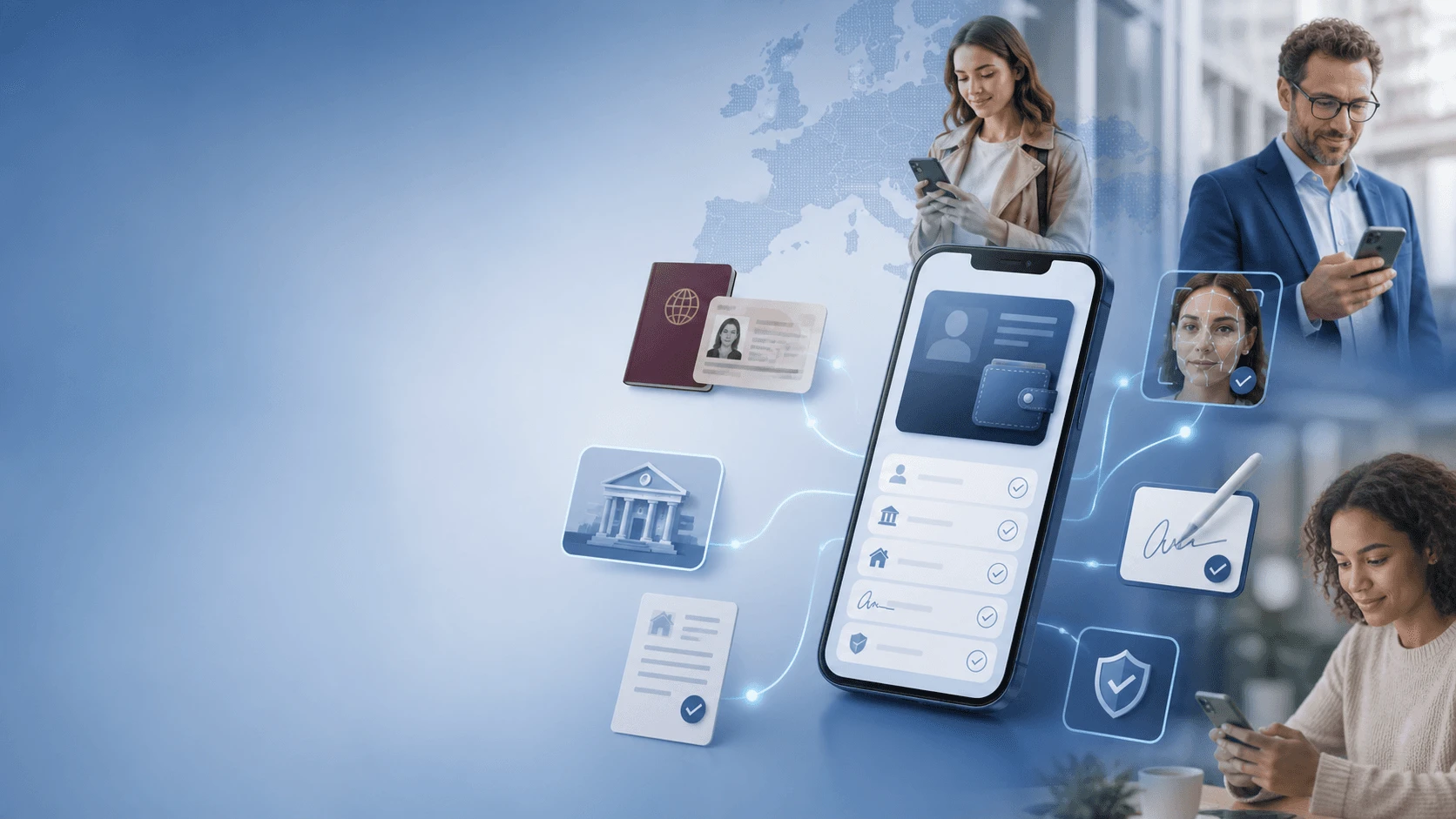
    Die EUDI Wallet kommt. Sind Sie bereit für das, was vor ihrer Ankunft passiert?

    The wallet is moving from policy to implementation

    The European Digital Identity Wallet is no longer just a policy topic. At the eIDAS Summit in Berlin on 28 and 29 April 2026, public and private stakeholders met to discuss EUDI Wallet implementation, pilot lessons and the next steps before wider European rollout.

    For businesses, this matters because identity is not a back-office detail. It affects onboarding, fraud prevention, age checks, contract signing, account creation, customer recovery and access to regulated services.

    The wallet promises a cleaner future: citizens and businesses sharing verified identity data digitally, with more control and less repeated document handling.

    That future is attractive. But the transition will not be clean.

    Businesses will need to support old and new identity methods at the same time

    The arrival of the EUDI Wallet does not mean passports, ID cards, bank-based identification and local eID schemes suddenly disappear from onboarding flows.

    Some customers will adopt wallet-based identity quickly. Others will not. Some markets will move faster than others. Some use cases will need qualified credentials. Others will still rely on document scans, bank-based ID, address validation or electronic signatures.

    This is the practical problem for companies: they cannot design for one identity method and assume the market will follow.

    • A Dutch customer may expect iDIN.
    • A Belgian customer may use itsme.
    • A German customer may follow a different route.
    • A Nordic customer may be used to BankID.
    • An international customer may only have a passport or residence document.
    • A high-risk case may still require extra checks.

    That is what onboarding will look like for a while: not one elegant route, but several routes that need to work without confusing the customer.

    The real question is not “will the wallet matter?”

    It will.

    The better question is: can your onboarding process handle change without being rebuilt every time?

    Many organisations have identity flows that grew one exception at a time. A new country was added. Then a new document type. Then a bank-based ID method. Then eSigning. Then AML screening. Then a manual review queue.

    The result works, but only because teams know where the workarounds are.

    That kind of setup becomes fragile when the identity market changes.

    The EUDI Wallet adds another reason to clean this up. Not because every business needs to be wallet-first tomorrow, but because identity orchestration will become more important. Companies will need to route customers through the right method based on country, risk level, document availability, regulatory requirements and customer preference.

    If that routing is hardcoded, slow or heavily manual, onboarding will suffer.

    Good identity flows reduce uncertainty

    A good onboarding flow does not ask every customer to do the same thing. It asks for the right level of assurance for the situation.

    • A low-risk customer may need a simple identity confirmation.
    • A regulated financial product may require stronger KYC.
    • A gambling operator may need age verification and exclusion checks.
    • A lease or financing journey may require identity plus affordability evidence.
    • A contract flow may need an electronic signature that can be defended later.

    The point is not to collect more data by default. The point is to collect the right data, at the right moment, with a clear reason.

    That is where many onboarding flows go wrong. They ask too much too early, or they ask too little and create manual follow-up later. Both hurt conversion. Both create operational cost.

    The wallet may reduce friction, but not all friction

    The EUDI Wallet could remove some of today’s repeated identity work. If a customer can share verified credentials directly, businesses may need fewer document uploads and fewer manual checks.

    But the wallet will not remove every business rule. Companies will still need to decide which credentials are acceptable, how consent is captured, when additional verification is needed, how fraud signals are handled and how the process is documented.

    They will also need fallback routes. A customer without a wallet still needs to onboard. A cross-border customer may not have the expected credential. A document may still need to be verified. A signature may still be required.

    So the practical goal is not to replace the current onboarding flow with “the wallet”. The goal is to build an onboarding process that can use the wallet where it helps, and use other methods where it does not.

    What companies should review before the market shifts

    Businesses do not need to wait for full EUDI Wallet adoption before improving onboarding. In fact, waiting may make the transition harder.

    A useful review starts with five questions:

    1. Which identity methods do we support today? Include document scanning, bank-based ID, eID schemes, address validation and manual review.
    2. Where do customers drop off? Look for steps where users abandon the process, upload the wrong document or need support.
    3. Which checks are truly required? Separate regulatory requirements from habits that became part of the flow over time.
    4. Can we route customers by risk and context? A single fixed process is rarely the best process.
    5. Can we add a new identity method without rebuilding the journey? This is the wallet-readiness test that matters most. If adding a new method requires a long technical project, several manual workarounds and new support scripts, the architecture is probably too rigid.

    Where Bluem fits

    Bluem helps companies build onboarding flows that can handle multiple identity and trust methods in one process. That can include ID document verification, bank-based identification, address validation, eSigning and compliance checks.

    The value is not in pushing every customer through the same path. It is in giving each customer a route that fits the situation while keeping the process manageable for the business.

    That matters now because the identity market is changing. The EUDI Wallet will become part of the landscape, but it will sit alongside existing methods for some time.

    Companies that prepare well will not be the ones that wait for a perfect European identity standard. They will be the ones that make their onboarding flexible enough to support today’s customers and tomorrow’s credentials.

    Want to see where your onboarding flow may become a bottleneck? Bluem can help you review your current identity routes and prepare for wallet-based verification without breaking what already works.

  • Identitätsbetrug im Jahr 2026: Warum die jüngsten Nachrichten auf eine komplexere Bedrohung hinweisen

    Identitätsbetrug im Jahr 2026: Warum die jüngsten Nachrichten auf eine komplexere Bedrohung hinweisen

    Identitätsbetrug im Jahr 2026 wirkt jetzt anders.

    Betrug mit Identität ist nicht mehr nur eine Frage eines falschen Ausweises oder eines gestohlenen Passworts. Es wird immer einfacher, ihn zu begehen, und immer schwieriger zu verhindern. Diebstahldaten, künstlich erzeugte Identitäten durch maschinelles Lernen, Deepfakes und Account-Abstöße passen nun so zusammen, dass Betrug sowohl zugänglicher als auch überzeugender wird.

    Dieser Wandel findet an beiden Enden des Marktes statt. Am unteren Ende sind die Tools billiger, einfacher und einfacher zu nutzen. Am oberen Ende ist der Betrug geschliffener, zielgerichteter und schwieriger zu erkennen. Das Ergebnis ist eine Bedrohung, die sich von vor einigen Jahren unterscheidet: breiter, wiederverwendbarer und persönlicher.

    Die Zahlen zeigen bereits den Wandel. Im Jahr 2025 wurden in der britischen National Fraud Database bereits mehr als 444.000 Fälle registriert – der höchste jährliche Gesamtzahl seit Beginn der Datenerhebung. Fast drei Viertel dieser Fälle, 72%, waren mit Identitätsbetrug und Facility-Übernahme verbunden. Identitätsbetrug blieb die größte Kategorie.

    Betrug endet selten mit dem ersten Schritt

    Betrug bei der Identität und Account-Abholzung galten früher als separate Probleme. Heute sind sie viel enger miteinander verbunden. Die gleichen gestohlenen Daten können wiederverwendet werden, um eine gefälschte Anwendung zu unterstützen, eine echte Person zu imitieren, ein bestehendes Konto zu entsperren oder einen Betrug so überzeugend erscheinen zu lassen, dass er funktioniert.

    Deshalb wird der Einfluss immer stärker. Heute liegt mehr als die Identität einer Person in Systemen, die entscheiden, ob man ihr vertraut, anerkannt, genehmigt oder zugelassen wird. Wenn diese Identität missbraucht wird, geht der Schaden nicht auf eine einzige fehlende Überprüfung hinaus. Er kann sich auf Finanzen, Zugang, Reputation und die tägliche Sicherheit auswirken.

    Kurz gesagt: Die Betrugsaktivitäten bewegen sich immer weiter. Daten werden ausgesetzt oder gestohlen. Diese Daten ermöglichen die Identitätsbetrug. Identitätsbetrug öffnet die Tür zu Account-Ergreifungen oder weiteren Betrugshandlungen. Von dort aus kann der gleiche Kreislauf wiederholt werden.

    KI senkt die Barriere für Identitätsbetrug

    Die besorgniserregende Sache ist, dass technologische Fortschritte mehr Menschen Zugang zu Instrumenten verschaffen, die die Begehung von Identitätsbetrug erleichtern. Die Berichterstattung über öffentliche Betrugsfälle spiegelt diese Veränderung nun wider. Generative Tools helfen Kriminellen, überzeugende Imitationen, synthetische Identitäten und gefälschte Dokumente schneller und in größerem Umfang zu erstellen. Die von KI verstärkte Betrugsarbeit macht Betrug zudem komplexer und in einigen Fällen profitabler als ältere Methoden.

    Das Wichtigste ist nicht, dass KI eine brandneue Kriminalität erfunden hat. Vielmehr hat es bekannte Taktiken einfacher gemacht, anzuwenden. Überzeugende Botschaften sind einfacher zu erstellen. Falsche Begleitmaterialien sind einfacher zu generieren. Mehr Versionen derselben Betrugsmasche können gleichzeitig gestartet werden.

    In der Praxis bedeutet das etwas Einfacheres und Schlimmeres: Mehr Menschen können betrügerischerweise mehr Geld erbeuten. Die Herausforderung besteht nicht mehr nur darin, ob jemand über genügend gestohlene Informationen verfügt, um sich als eine andere Person auszugeben. Es geht darum, zu beweisen, dass diese Lüge in allen Dokumenten, Nachrichten, Anrufen und Kontobewegungen konsistent wirkt.

    Deepfakes sind in den Mittelpunkt der Geschichte gerückt

    Deepfakes sind in der Betrugswelt nicht mehr eine Nebenthematik. Sie werden zu einem Teil desselben Werkzeugkoffers. Die Deepfake-Technologie wird immer häufiger mit Betrug, Identitätsmissbrauch und fortschrittlicheren Formen der Täuschung in Verbindung gebracht. Außerdem erhöht sie das Risiko, dass Dokumentenbetrug schwerer zu erkennen ist.

    Deepfakes erlangen aufgrund ihrer Bedeutung einen zentralen Stellenwert. Sie stellen nicht nur Sicherheitsrisiken dar, sondern machen auch Identitätsmissbrauch persönlicher, wenn das Gesicht, die Stimme oder das Aussehen einer Person gegen sie eingesetzt wird.

    Das erschwert die Vertrauensbildung über Distanz. Ein gefälschter Behauptung, der von einer realistischen Sprachaufzeichnung, einem Bild oder einem Video unterstützt wird, ist überzeugender als eine reine Fälschung. Die eigentliche Schwäche liegt nicht in einem einzigen Bild oder einer einzigen Aufnahme. Es liegt vielmehr darin, dass zu viel Vertrauen auf eine enge Überprüfung und nicht auf den umfassenderen Prozess um diese gebettet ist.

    Die gestohlenen Daten leisten immer noch den Großteil der Arbeit.

    Trotz der großen Aufmerksamkeit, die der KI und Deepfakes gewidmet wird, liegt vieles von diesem Datendiebstahl noch immer im Hintergrund. Das hilft zu erklären, warum Identitätsbetrug immer wieder in verschiedenen Formen auftaucht. Ein Leak, ein Hack oder ein kompromittiertes Datenset sind oft nicht das Ende des Problems. Es ist der Anfang dessen, was man mit diesen Informationen tun kann. Sobald persönliche Daten gestohlen, verkauft oder wiederverwendet werden, können sie zur Identitätsbetrug, dem Hacking von Konten, gefälschten Anwendungen und weiteren Betrugsfällen genutzt werden.

    Insgesamt ist das Muster schwer zu übersehen. Die gestohlenen Daten bilden die Grundlage. Künstliche Intelligenz verbessert die Identitätsbetrugsart. Deepfakes verstärken die Illusion. Die Kontoinnehmer machen diese zu einem direkten Missbrauch. Jeder Teil erleichtert den nächsten Schritt.

    Was jetzt anders ist

    Die größte Veränderung liegt nicht nur darin, dass Betrug zunimmt. Vielmehr ist es so, dass Betrug einfacher zu begehen ist. Identitätsbetrug, Übernahme von Einrichtungen, Missbrauch gestohlener Daten, KI-gestützte Identitätsbetrug und Deepfake-basierte Betrugsstrategien überschneiden sich heute viel häufiger als früher.

    Deshalb wirken ältere Ansätze zur Beschreibung von Identitätsbetrug zu eng. Es reicht nicht mehr aus, zu fragen, ob ein bestimmtes Ausweisbild oder eine bestimmte Identitätsangabe echt ist. Die schwerere Frage ist, ob das Gesamtbild Sinn ergibt: die Identitätserklärung, die dahinterstehenden Daten, das Verhalten in Zusammenhang mit dieser und der Kontext, in dem sie erscheint.

    Deshalb ist dieses Thema in der Verifizierung längst nicht mehr nur eine Spezialität. Die Identitätsbetrugsfälle fallen nun in einen viel umfassenderen Sicherheitsrisiko.

    Fazit

    Die Identitätsbetrugsfälle von 2026 sind mehr als nur ein Problem der Verifizierung. Sie können die Finanzen stören, die Reputation schädigen und das Sicherheitsgefühl einer Person untergraben.

    Was jetzt anders wirkt, ist nicht eine neue Taktik. Es ist die Art und Weise, wie mehrere Taktiken zusammenpassen. Diegestohlene Daten, skalierbare Identitätsbetrugsversuche, Deepfakes und Account-Takeover verstärken sich gegenseitig. Genau das macht Identitätsbetrug schwerer zu ergreifen, einfacher zu wiederholen und für die Betroffenen schwerer zu ertragen.

    Bei Bluem helfen wir Organisationen dabei, diesen Wandel zu bewältigen, indem wir Identitätsüberprüfung, Zahlungsdaten und Compliance-Kontrollen in einem einzigen Prozess zusammenführen. Anstatt auf einen einzigen Moment der Überprüfung zu setzen, unterstützen unsere Lösungen eine kontinuierliche Einsicht in die Person, mit der man Geschäfte macht. Dadurch können Unternehmen Risiken früher erkennen, die Betrugsgefährdung reduzieren und Prozesse effizient gestalten, ohne für legitime Kunden unnötige Hürden zu schaffen.

  • Die Zukunft der Kundenakquise: schnell, sicher und konform

    Die Zukunft der Kundenakquise: schnell, sicher und konform

    An efficient and secure customer onboarding is essential for the success of any organization. A well-structured process offers an optimal customer experience, minimizes risks, and complies with all laws and regulations, such as the Wwft. In this article, we show you how to set up the onboarding process digitally using Bluem.

    What is customer onboarding?

    Customer onboarding is the process where new customers register, are identified, and approved for access to your services. This includes multiple steps such as identity verification, legal restrictions checks, and obtaining legally valid permissions for transactions.

    1. IBAN Name Check: certainty over payment details

    A correct link between a customer and their bank account prevents incorrect payments and reduces the risk of fraud. With Bluem’s IBAN-Nameprüfung, the provided name is directly compared with the name known at the bank for the entered IBAN number.

    2. Identity Verification: know who your customer is

    Identity verification is a crucial part of any onboarding. Bluem offers multiple solutions to perform this quickly and securely:

    • iDIN: Verification via the customer’s banking environment. Quick, reliable, and legally trustworthy.
    • ID Scan: Advanced tool for document verification and biometric identification.

    These methods help prevent fraud and ensure that only legitimate customers gain access.

    3. PEP and Sanction List Check: meet compliance requirements

    To comply with the Wwft, it is necessary to screen customers against international sanction lists and PEP lists (Politically Exposed Persons). Bluem offers an automated solution that:

    • Searches international sanction lists.
    • Checks PEP profiles.
    • Monitors negative media.

    Any matches are flagged for manual review by your compliance team.

    With an automatic check in the Central Guardianship and Administration Register (CCBR), you prevent entering into agreements with persons who are legally incompetent to act.

    Process:

    • The customer’s personal data is automatically compared with the register.
    • In case of a match, additional consent from an authorized representative may be requested.

    This ensures the legal validity of the agreement.

    5. Digital Signing: legally binding and efficient

    Digital signatures speed up the onboarding process and reduce paperwork. With Bluem and Scrive, customers can sign documents in a legally valid and secure manner.

    Benefits:

    • Legally binding (eIDAS-compliant).
    • Two-factor authentication.
    • Automatic storage and assurance.

    6. Digital Direct Debit Authorization: streamlined payment traffic

    For subscriptions or recurring payments, Bluem offers the possibility of digital direct debit authorizations (eMandates). This allows the customer to safely and easily give permission for automatic debits.

    How it works:

    • The customer receives a digital authorization via a secure link.
    • Verification is done via, for example, iDIN or SMS authentication.
    • After approval, debits are processed automatically.

    Conclusion: one platform for complete digital customer onboarding

    With Bluem, you have a complete suite of tools to set up the onboarding process digitally, securely, and compliant. From identity verification and IBAN control to digital signatures and direct debit authorizations – Bluem supports you at every step.

    A well-structured onboarding increases customer satisfaction, prevents errors, and ensures compliance with all laws and regulations.

    Want to know more about how Bluem can optimize your onboarding process? Get in contact with us for a non-binding consultation